How Is It Applied?
Colo-Check analysis is an optimized process that progresses step by step
Colo-Check is an analysis process in which every step, from sample collection to result reporting, is planned in a controlled, highly sensitive way suitable for molecular diagnostics.
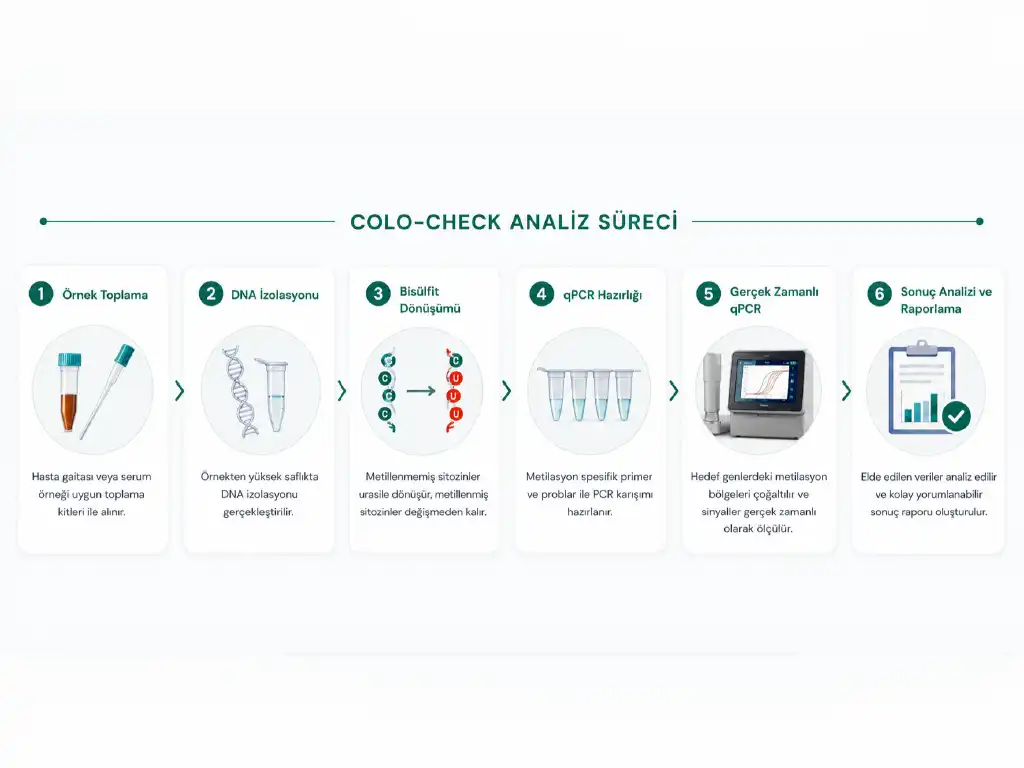
Sample quality and DNA integrity are key factors that directly affect test performance.
Diagnostic workflow
Step-by-step Colo-Check analysis
The process consists of proper sample collection, transportation to the laboratory under suitable conditions, preservation of genetic material, molecular analysis, and result interpretation.
Collection of patient samples
Stool and/or serum samples are collected from the patient for the test. For the highest accuracy rate, it is recommended that stool and serum samples collected from the same patient be evaluated together.
Sample acceptance and quality control
It is checked whether the samples have arrived under suitable conditions. Sample quality is critical for DNA integrity and analysis reliability.
Preparation of genetic material
DNA isolation is performed from the samples in the laboratory environment. The pre-analysis process is carried out in a way that preserves molecular diagnostic sensitivity.
Analysis of epigenetic targets
Colo-Check works through gene panels that target cancer-specific DNA methylation patterns. Stool and serum samples can be analyzed separately or together.
Evaluation of results
The obtained molecular findings are evaluated. Patients with positive results should be referred for colonoscopy for clinical confirmation.
Sample quality
The success of the test begins with sample integrity
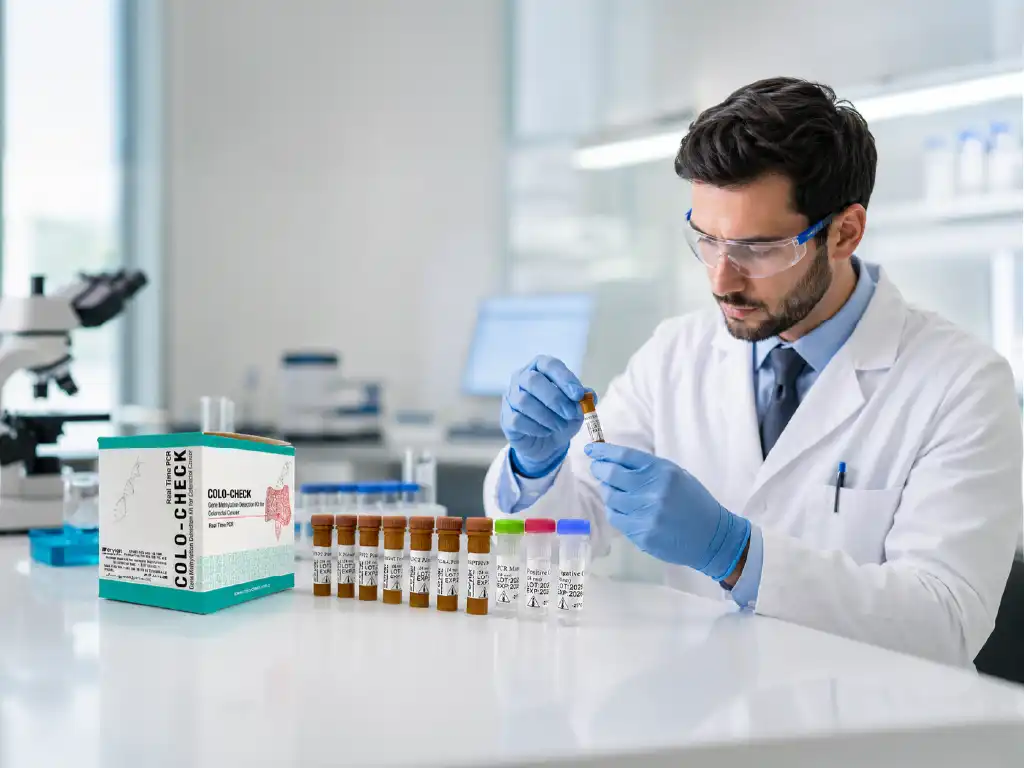
In the Colo-Check process, collecting, preserving, and delivering the sample to the laboratory correctly directly affects analysis performance.
Patient experience
Non-invasive and patient-friendly application approach
Compared to the invasive nature of colonoscopy, the need for sedation, and challenging preparation processes, Colo-Check aims to provide a more comfortable screening experience.
Does not require colonoscopy preparation
It offers a more comfortable sampling approach independent of challenging bowel preparation and sedation processes.
Supports patient compliance
Thanks to its non-invasive structure, it may help increase participation in the screening process.
Referral in case of a positive result
Patients with a positive test result are referred for colonoscopy for clinical confirmation.
Application process
Controlled, fast, and molecular-based analysis
Colo-Check offers an optimized molecular diagnostic process carried out in an advanced technology laboratory environment, from sample acceptance to reporting.